🌿
Lifestyle
What does 'sober curious' mean?
Questioning your relationship with alcohol on purpose. No labels, no commitment.
What to drink instead of alcohol depends on what yours was doing. If it was the taste, go bitter rather than sweet — soda and fresh lime, tonic and citrus, strong iced tea, kombucha. If it was the ritual, pick something with steps and use a real glass. If it was the signal marking the end of the day, pair the drink with a shower or a walk. If it was the effect, no drink replaces that, and pretending one does is why these lists fail.
Ask what to drink instead of alcohol and the internet hands you a list of products. That is the wrong shape of answer, because the drink was never doing only one job. Work out which job yours was doing and the replacement picks itself — and sometimes the answer is not a drink at all. SoberLine's habit tracker is aimed at this exact slot.
Most people find one or two of these dominate. Be honest about which:
The single most common mistake is replacing a dry drink with a sugary one. Bitterness and acidity are what read as "adult" — sweetness reads as a consolation prize and gets old in three days. What works: soda water with a lot of fresh lime or grapefruit, tonic with citrus, cold brew coffee over ice in the afternoon, strong iced tea gone slightly bitter, kombucha, a good alcohol-free bitter aperitif. One caveat worth knowing: classic cocktail bitters are alcohol-based, so if you are avoiding alcohol entirely, check the bottle.
Choose something with steps. Loose-leaf tea that has to be measured and timed, a proper coffee, something you build in a glass with ice and citrus and a garnish that you cut. It should take three or four minutes and occupy your hands. A can taken from the fridge does not replace a ritual, however good the contents.
And use a real glass. This sounds trivial and is not: the vessel carries most of the ceremony. Sparkling water in the wine glass you were using is a meaningfully different experience from the same water in a plastic bottle.
Here a drink alone will usually fail, because the drink was standing in for a transition. Attach it to something: the drink plus a shower, the drink plus a walk round the block, the drink plus changing clothes. The pairing does the work the pour used to do.
Nothing in a glass takes the edge off the way alcohol did. What actually addresses it is physical — a walk, a hot shower, paced breathing, or sleep, if the real answer is that you are exhausted. Expecting a mocktail to do this sets it up to fail and then convinces you that nothing works.
They are the closest substitute available and for a lot of people they are the thing that makes a party survivable. Two honest caveats before you stock the fridge:
If you have found something you genuinely like and 7 p.m. is still difficult, the slot needs an activity rather than a beverage. That is not a failure of the drink — it means the job it was doing was the signal or the effect, not the taste. Filling the evening properly is most of what makes sobriety stick past the first month, and if the evenings are the specific problem, the structural fixes for the drinking hours do more than any glass will.
And if a craving arrives anyway, it is not a sign the replacement failed — it will pass in about three to ten minutes whether or not there is something in your hand.
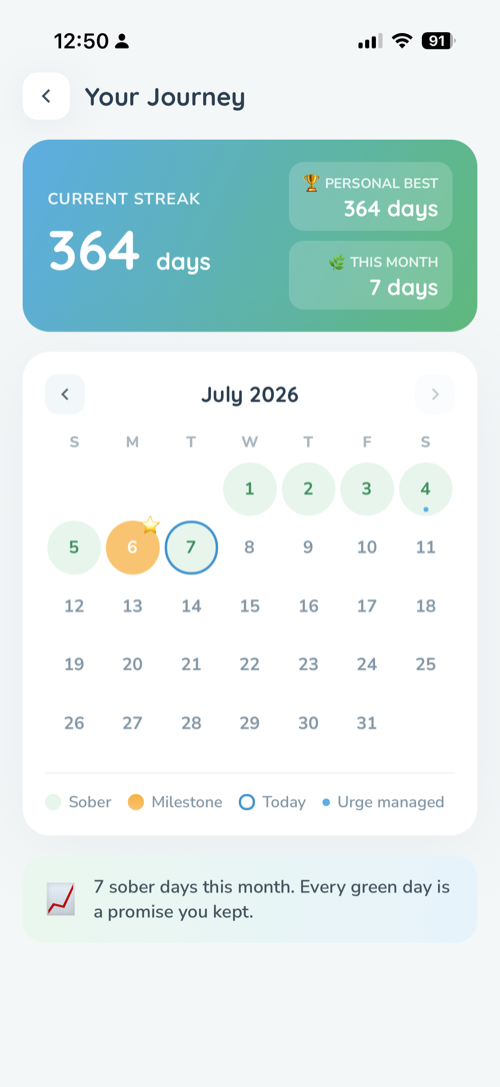
The app treats the empty evening slot as the actual problem, which is what this page is about:
Questioning your relationship with alcohol on purpose. No labels, no commitment.
Practical tips that work in any month, not just January.
Getting sober and staying sober are different problems. This one is the second.
Free to download, with a free trial for new members. You're not alone in this.