🌱
The full plan
How to stop drinking: a realistic 7-step plan
Structure beats willpower. The complete guide.
How to cut back on drinking, in one line: it works when it's specific. Set numeric rules (drink-free days per week, a per-occasion cap), make them visible by tracking every drink, slow each drinking session down, and redesign the situations where the overdrinking actually happens. Vague intentions ("drink less") get renegotiated after the second glass; concrete rules stick.
Not everyone who wants to change their drinking wants to quit. Maybe you like wine with dinner but not the third glass. Maybe Friday nights got heavier than you meant them to. Cutting down is a legitimate goal, full stop, and it deserves a real plan, not just a resolution. Here's how to drink less in a way that actually holds.
"I should drink less" is the most common drinking goal in the world, and the least successful. The problem isn't willpower. It's that the goal has no edges. "Less" can always be renegotiated in the moment, and the moment is exactly when you're worst at negotiating: two drinks in, relaxed, surrounded by reasons to have one more. Tonight can always be the exception, because nothing defines what the rule was.
A rule is different. "No drinking Monday to Thursday" is checkable. At any moment you either kept it or you didn't. There's nothing to debate at 9 p.m. That's why specificity beats intention. Three things make cutting back work:
If it helps, treat the whole thing as an experiment rather than a verdict on your character. The sober curious mindset is exactly this: get curious about your drinking, collect data, and let the results tell you what to do next.
Here's the menu. Each of these is concrete, checkable, and proven in practice:
Now the important part: pick two or three, not all five. A wall of rules collapses the first stressful week. Two rules you actually keep beat six you abandon, and you can always add another once the first ones feel automatic. Write them down somewhere you'll see them.
This is the step people skip, and it's the one that does the most work. The act of logging changes behavior all by itself: a drink you have to record is a drink you have to notice, and noticing is where autopilot ends. That pause, reaching for the log before reaching for the bottle, is often the whole battle.
Two conditions make tracking work. First, log everything, including the nights that went sideways. A record you only keep when it flatters you is a diary, not data. No rounding the heavy pour down to "one glass." Second, review weekly: once a week, look at the log and ask three questions. Which rules held? Where exactly did one break: what day, what place, what mood? And what single adjustment would help next week? One adjustment, not five. Cutting back is iteration, not a purity test.
Rules control how often you drink. Pace controls how much. Most overdrinking isn't a decision. It's momentum, and momentum can be engineered away:
Look at your log after two weeks and you'll notice the overdrinking isn't random. It lives in two or three specific, repeating situations. Don't fight those situations with willpower. Redesign them:
The Friday autopilot. Friday drinks aren't a decision; they're a default that fills the empty square after the work week. Defaults are beaten by bookings, not resolve. Put something concrete at 6 p.m. (a class, a run, a film, dinner somewhere you like) so Friday already has a shape before the "quick one?" message lands. Script: "Can't tonight, got a thing at six. Saturday coffee instead?"
The wine-while-cooking habit. This one is pure ritual: hand wants a glass, glass happens to hold wine. Keep the ritual, swap the contents: sparkling water or an alcohol-free wine in the same stemmed glass while you cook, and if you're drinking that night, the wine arrives with the meal, not forty minutes before it.
Rounds culture. Rounds are a pace-setting machine: you drink at the group's speed and owe drinks you didn't want. Break the loop early and casually. Script: "I'm getting my own tonight, I'm keeping it slow, but this round's on me." Order first when you can, so your alcohol-free choice sets your pace instead of following someone else's. Nobody remembers what was in your glass; they remember whether you were there.
Give your rules an honest trial: a few weeks, tracked, reviewed. Then look at the data and be straight with yourself about two checkpoints:
Here's the reframe that matters: this is information, not failure. A moderation experiment that keeps failing has told you something valuable: that for you, and for your pattern, moderation may genuinely be the harder path. Plenty of people find total abstinence easier than endless limit-setting, because it removes the negotiation entirely. There's no daily debate about whether tonight qualifies as an exception; the answer is already no, and the mental quiet that follows surprises people.
Two good next moves. Run a month completely alcohol-free as a diagnostic: a month off is the best moderation experiment there is, because it shows you exactly what alcohol was doing and how hard it fights back. Or, if you conclude that quitting is simply the cleaner deal, start with the full 7-step plan for stopping drinking. And if the rules keep breaking no matter what you try and it's starting to scare you, read what to do when you feel like you can't stop. You have more options than it feels like right now.
One group should not run this experiment solo: people with signs of physical dependence. If you drink heavily every day and get shaky, sweaty, anxious or nauseous when you go without, or if you've ever had a morning drink to settle those symptoms, talk to a doctor before changing anything. This isn't only a quitting issue: for a heavy daily drinker, even cutting back sharply can trigger withdrawal, and withdrawal can be dangerous. A doctor can help you reduce safely, sometimes with medication that makes the whole process far more comfortable. That's not a detour from the plan; for some people it is the plan.
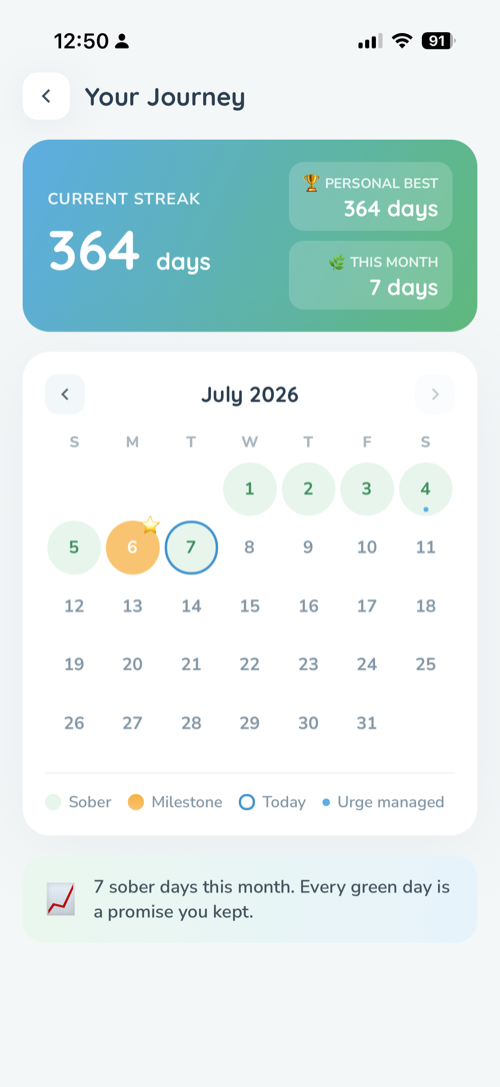
SoberLine is built for cutting down, not just quitting. No shame, no lectures, your goal is your goal:

Structure beats willpower. The complete guide.
Questioning your drinking without quitting: the experiment mindset.
A month off is the best drinking experiment there is.
Free to try. You're not alone in this.